Refresh the finish
Review scratches, rings, worn edges and tired surfaces on tables, desks and casegoods for touch-ups or a full refinish.

A new color. A refreshed finish. A better first impression. We help hotels, clubs, law firms and offices renew existing wood furniture with repairs, refinishing and suitable adjustments—planned around your space and the look you want.
Use the short review form first. You will receive a project reference to include when emailing photos or plans.
fatih@woodpeckertampa.comteam@thewoodpeckertampa.com
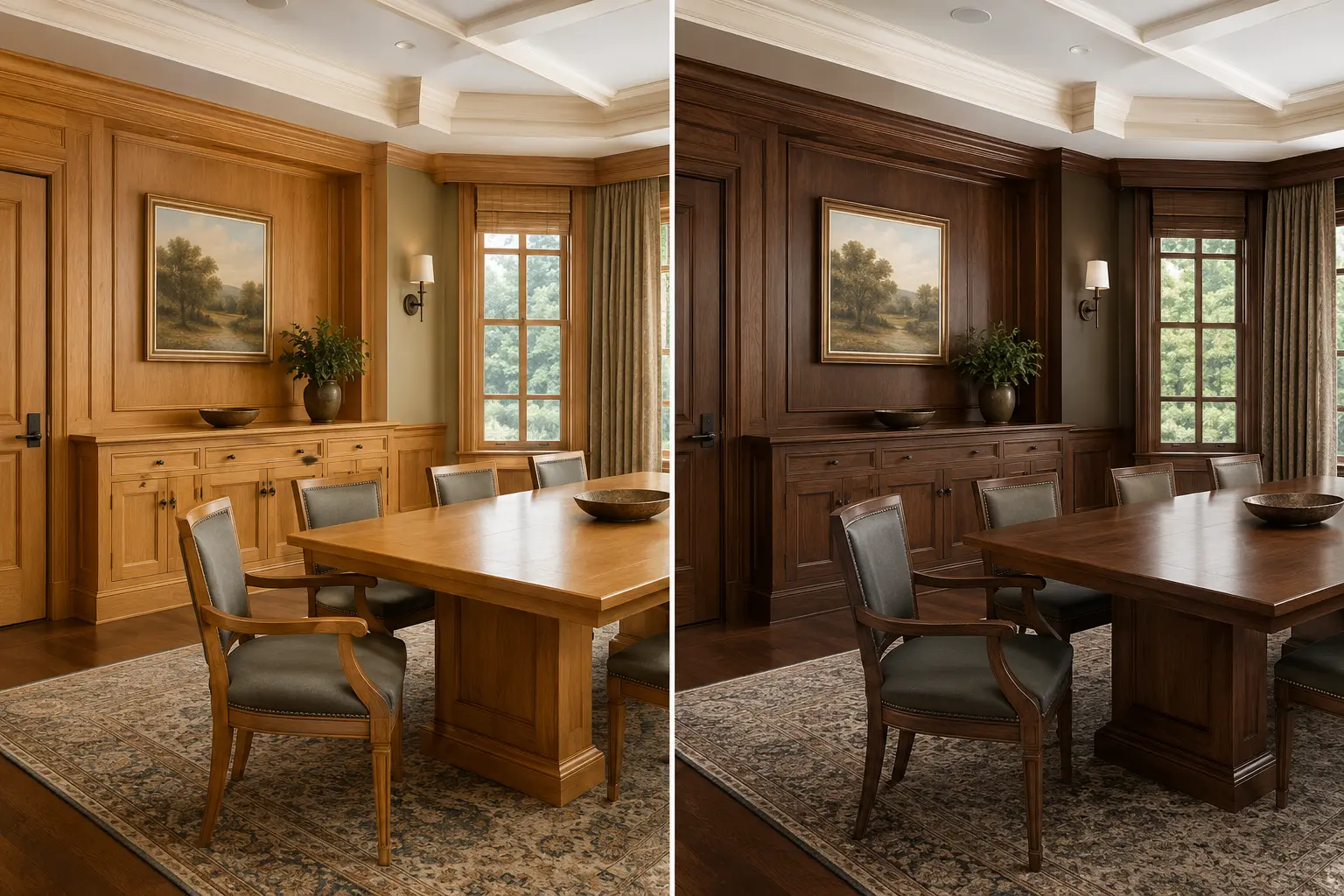
Repair · Refinish · Reimagine
Updating a hotel, office or club does not always mean starting from scratch. A well-made table, credenza, reception desk or built-in may already have the right proportions. Let’s review what can be repaired, recolored or adjusted to fit your next chapter.
See real finish and color examples from our studio · Explore hotel and office refurbishment
The studio behind the commercial offer
This commercial website belongs to The Woodpecker Tampa, led by Fatih Oezge. Our main website is thewoodpeckertampa.com, home to our studio story, project photos and client reviews. Speak directly with Fatih about the pieces, finish standards and practical requirements of your property.
Paid proof pilot
Show the most worn representative item and share the approximate quantity or room count.
We confirm project fit, finish direction, fixed pilot price, handling and schedule in writing.
Inspect the completed piece, then stop there or request a larger phased rollout.
Restoration versus replacement
Restoration is not the lesser choice. When the original furniture is well built, it can be the more disciplined investment—protecting craftsmanship, brand continuity and asset value while reducing unnecessary replacement spend and disruption.
Equivalent quality, customization, freight, receiving, removal, disposal and installation all belong in the replacement column.
Older pieces often use solid wood, repairable joinery and materials that can outperform lower-grade new replacements.
Keep the proportions, finishes and character guests, members, clients and communities already associate with the property.
A phased restoration plan can be faster and easier to coordinate than sourcing, shipping, removing and installing a full replacement package.
A Woodpecker interior designer can support finish direction, color alignment and sample approval through the final specification.
Published context: commercial examples range from about 10% program-level savings to more than 50% on qualifying remanufactured furniture. These are examples, not a Woodpecker average. Sources: UK government value model and Public Health Wales case study.
Your like-for-like comparison
Compare against a genuinely equivalent new piece—including comparable quality, freight, removal and installation.
Enter a quantity and both positive per-unit costs to see a transparent comparison.
Planning illustration only—not a quote or savings promise. Suitability, timing and final cost depend on condition, construction, finish, quantity, access and logistics.
Who it is for
Guest-room casegoods, lobby pieces and repeatable furniture groups.
See what we assessDining tables, host stands, locker-room casework and statement pieces.
See what we assessConference tables, credenzas, reception furniture and executive pieces.
See what we assessPreservation-minded repair of furniture and woodwork where character and continuity matter.
See what we assessRepresentative spaces, common areas and repeatable portfolio work.
See what we assessQualifying interior joinery, cabinetry, tables, doors, trim and marine hardware.
See what we assessOld-world care. Smarter tools.
Every project begins with the material, the finish and the setting—not with a one-size-fits-all process.
For compatible surfaces, laser cleaning can remove selected paint, rust, oxidation and residues without blasting media or chemical stripping agents. We begin with a test area and match the method, extraction and safety controls to the material and coating.
The honest answer
Not every worn piece should be restored. We review the substrate, damage, finish goal, access and logistics first—and tell you when replacement or another solution is smarter.
Approved-scope reviewIf completed work materially differs from the approved sample or written pilot scope, we inspect the affected work and address the issue according to the signed proposal. Review our terms and conditions.
Good to know
Yes, suitable wood furniture can be refinished in a different paint color or stain direction. We assess the material and existing coating, then agree the color, sheen and a finish sample when needed. Some veneers, laminates and damaged surfaces limit the available options.
We can review loose joints, sticking doors or drawers, worn edges and selected hardware changes alongside refinishing. Share the adjustment you want and photos of the piece. Construction, dimensions and intended use determine what is feasible; each change is included in the written scope before work begins.
Yes. Send your furniture schedule or approximate quantities, current-condition photos, new color or design references and the renovation dates. We assess which pieces can be renewed, agree a representative paid pilot and discuss phasing, handling and return-to-use requirements before a wider rollout.
A small, paid restoration project using one representative piece, a small furniture group or a model-room scope. It lets your team inspect the real finish and cost before considering a larger rollout.
No. It is real production work with assessment, preparation, materials, handling and finishing. The scope stays intentionally small so you can test the work without a bulk commitment.
After reviewing condition, access, repairs, finish and logistics, we provide one fixed written pilot price before work begins.
Potential candidates include casegoods, desks, conference and dining tables, credenzas, reception or host stands, and qualifying built-in wood elements. Suitability depends on construction, substrate, damage, finish and access.
There is no honest universal percentage. Published commercial examples have ranged from about 10% at a whole-program level to more than 50% on qualifying remanufactured furniture. Those are examples—not a Woodpecker average or promise. We compare your restoration scope with like-for-like replacement quality, including freight, removal and installation.
Yes. Some older pieces use solid hardwood, substantial veneers or repairable joinery that can be difficult or expensive to replace with comparable quality today. Age alone does not prove quality, so we assess construction and condition before recommending restoration.
It can be, especially when work is phased and comparable replacements have long production or delivery times. The actual schedule depends on quantity, repairs, access, logistics and curing requirements.
Yes. On request, a Woodpecker interior designer can support color and finish direction, room context and sample approval so the written specification is precise and cohesive.
No. Laser cleaning is a precision option for compatible materials and coatings. We begin with a discreet test area. Wood, masonry, fiberglass, gelcoat, historic finishes and legacy coatings require individual review, appropriate extraction and safety controls.
We will say so. The review is meant to determine whether restoration is technically and commercially sensible for the asset—not to force every project into a restoration plan.
Start with three photos
Share the pieces, the look you want and your renovation dates. We’ll review what can be renewed and help define the next step.