A finish, a familiar silhouette, a piece worth keeping. Explore selected examples from our studio portfolio and the choices to consider for your own furniture.
01 / Furniture refinishing
A green finish with the detail still in view.
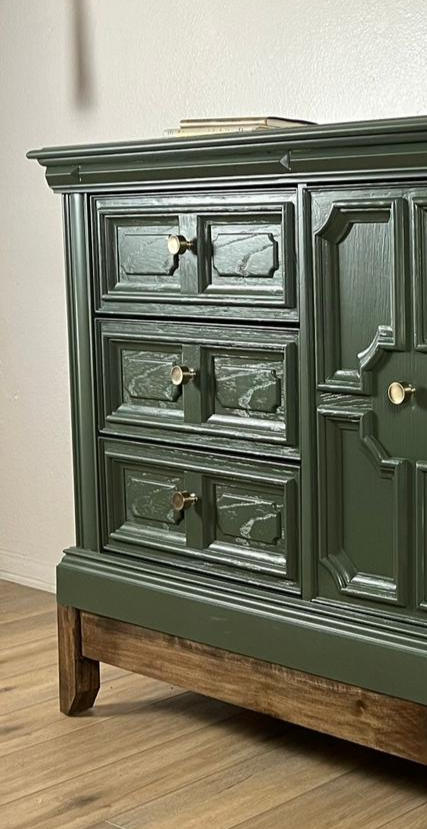
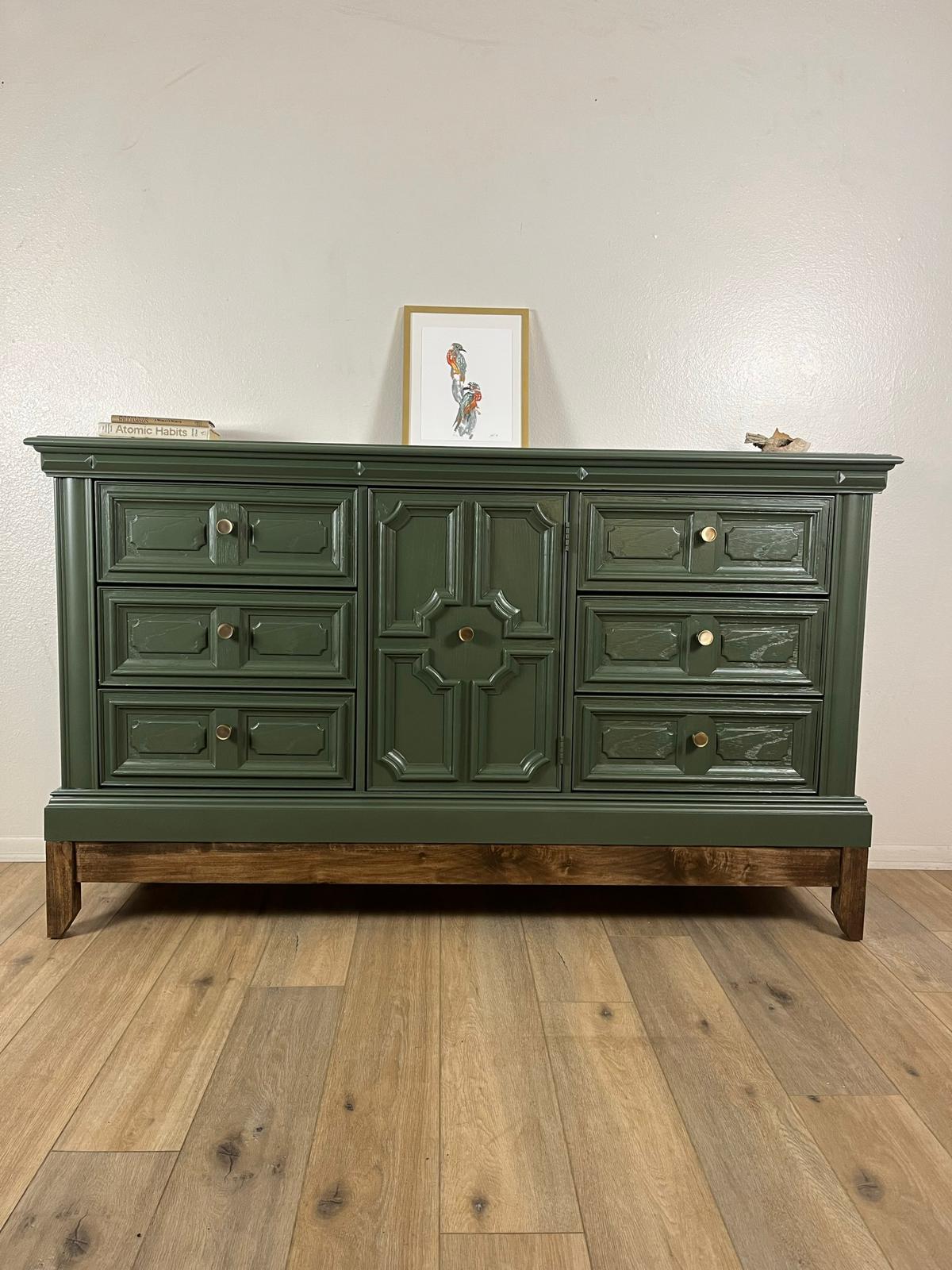
A deep green finish, raised panel details and round metal knobs define this dresser in the studio portfolio. The contrasting wood base keeps the grain visible beneath the painted body.
Detail view: painted drawer fronts and contrasting wood base.Full view of the green dresser from the studio gallery.
Considering a similar project?
For a dresser, buffet or credenza, start by deciding which features you want to keep. A painted body, a visible wood surface and a change of hardware are separate choices. The review considers drawer operation, existing coatings and the detail you want the finish to reveal. Bring a room photo or a color reference so the piece can be considered in its setting.
Your material, existing finish and condition determine the scope. Preparation methods and finish specifications are agreed after assessment.
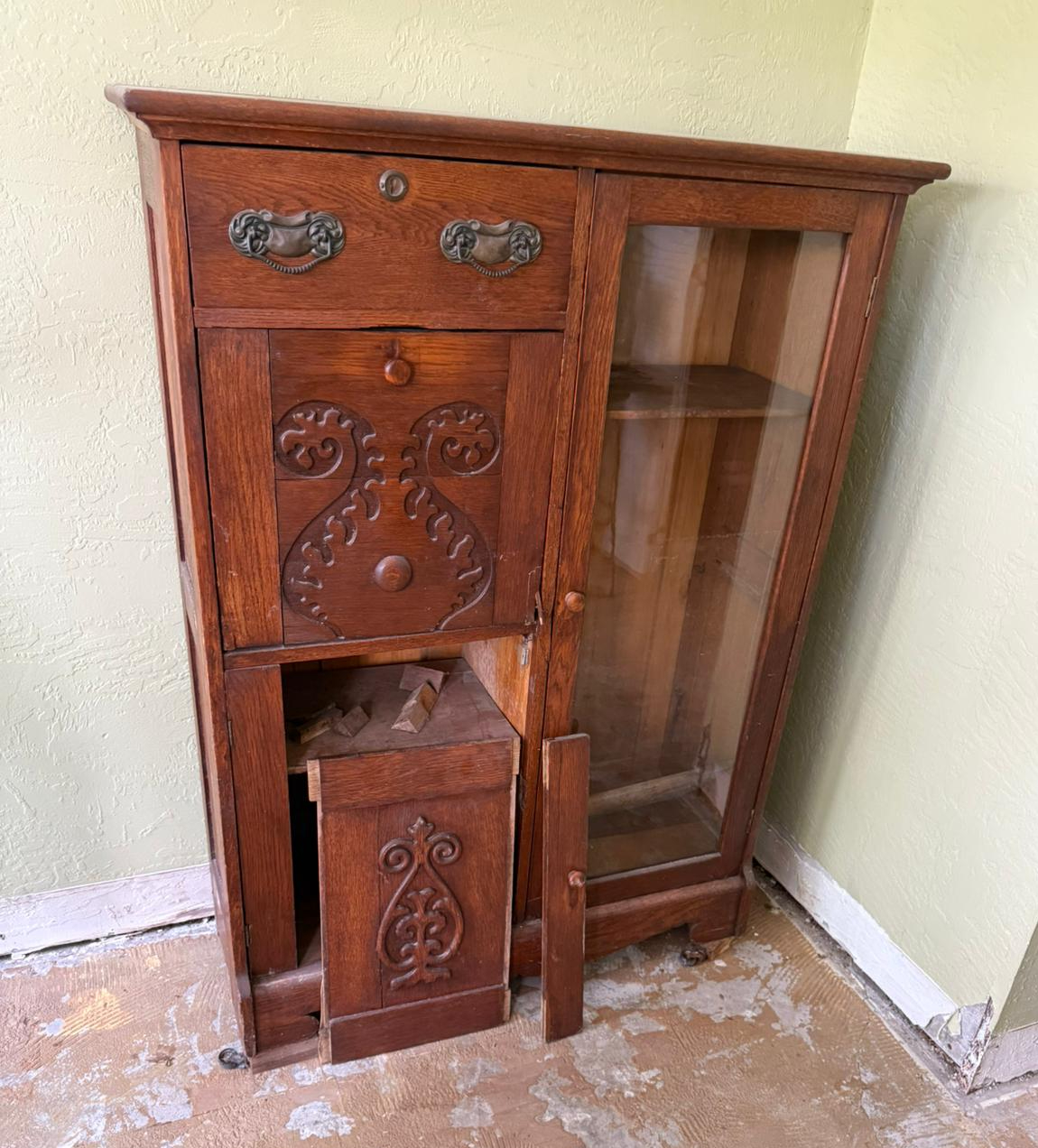
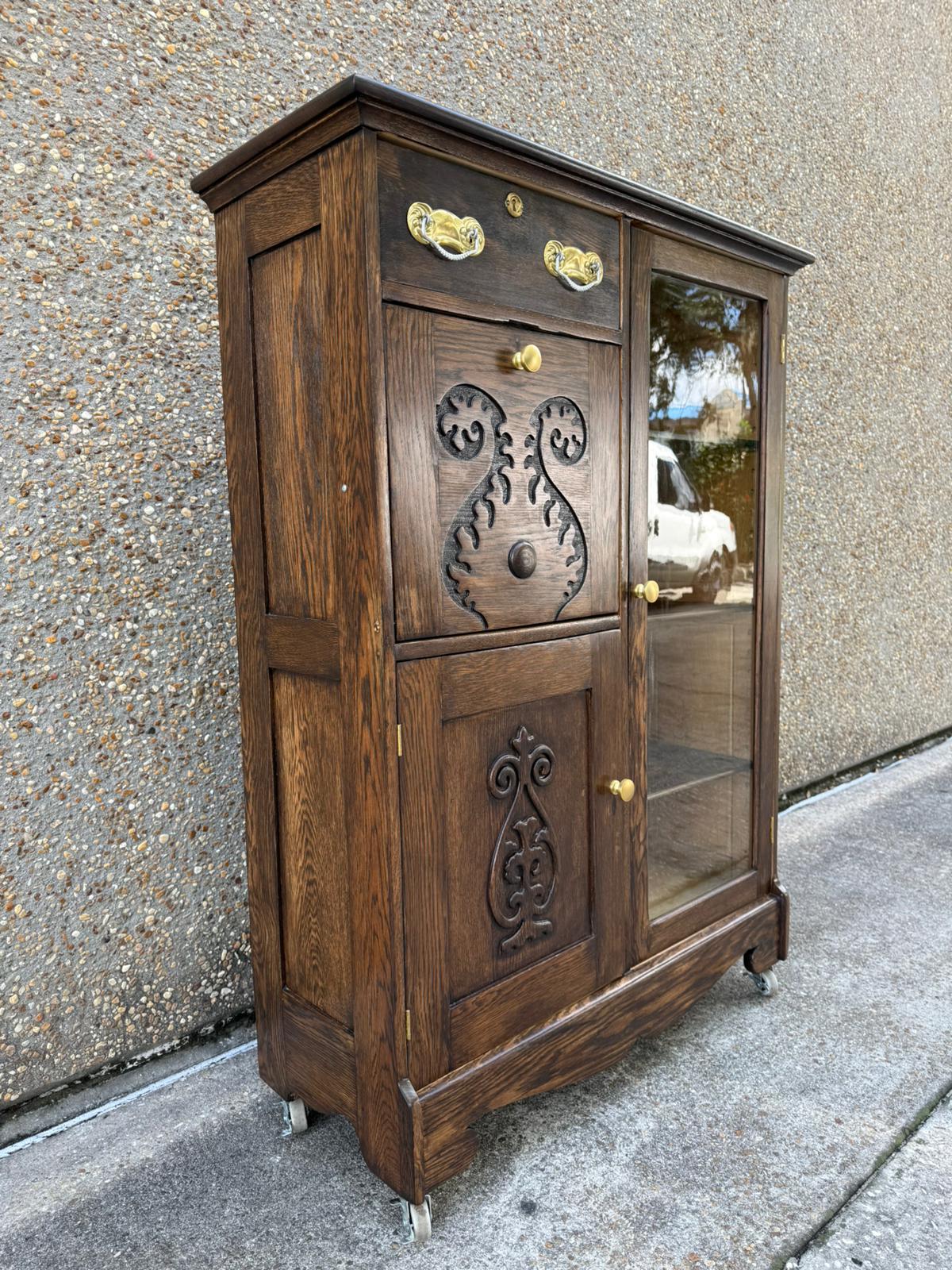
The carved door panels, top drawer and glazed display section identify this cabinet across two gallery views. The first shows a detached lower door; the second shows the cabinet assembled, with a darker wood finish and bright metal hardware.
Condition view: a detached lower door beside the glazed display section.Assembled cabinet: carved panels, wood grain and hardware in view.
Considering a similar project?
For an heirloom cabinet, the first discussion is about what matters to preserve: a familiar color, decorative carving, existing hardware or the way the piece is used. Loose parts, glazed doors and delicate details need their own review. Keep detached components with the piece and photograph them so they can be included in the assessment.
Your material, existing finish and condition determine the scope. Preparation methods and finish specifications are agreed after assessment.
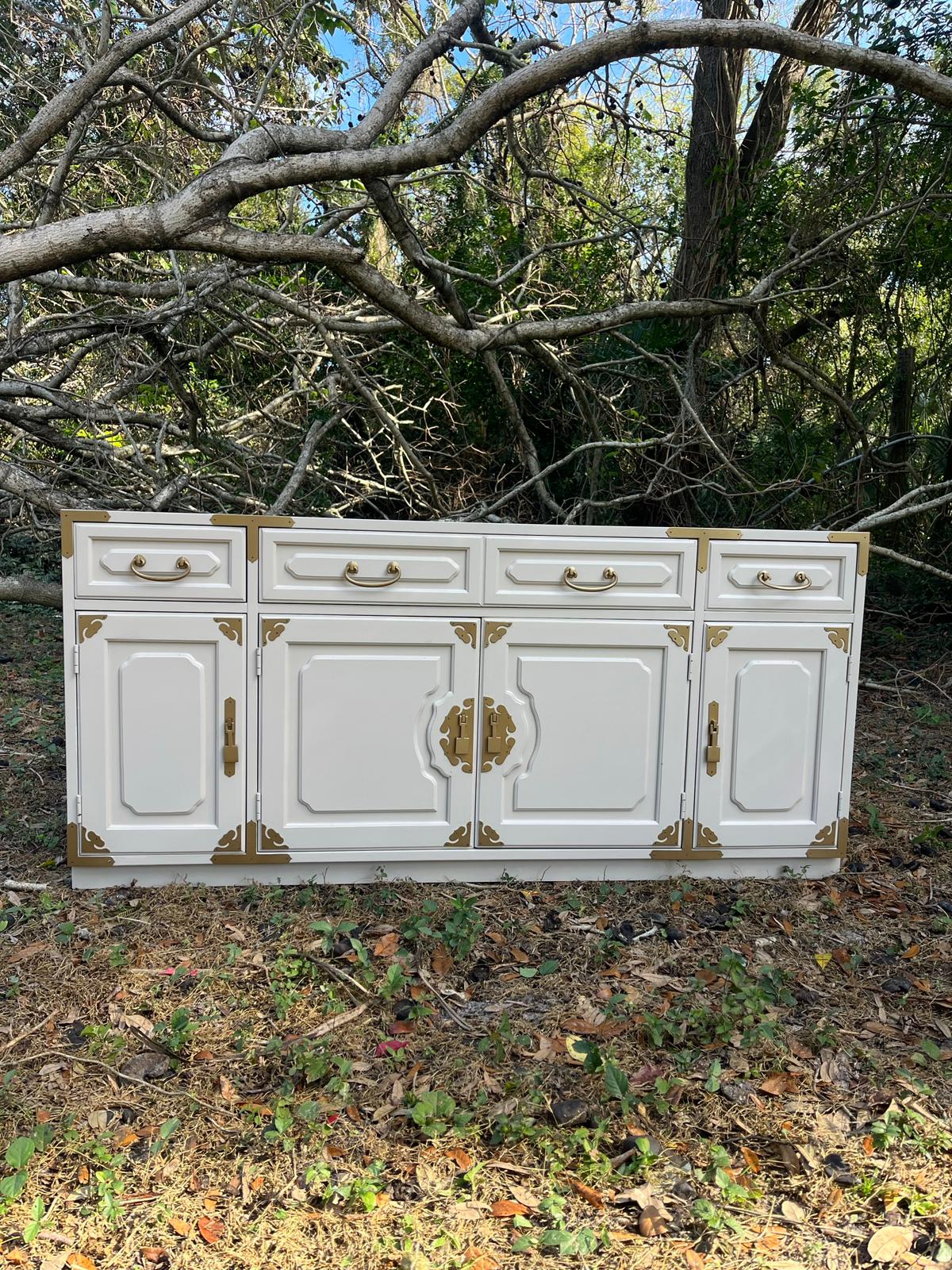
This sideboard pairs a light painted finish with gold-tone pulls, corner plates and decorative fittings. The paneled doors and drawer fronts give the metal details a clear place in the design.
Sideboard from the studio portfolio: light paint and decorative metal details.
Considering a similar project?
When a piece has prominent metalwork, plan the finish and hardware together. Discuss whether fittings should be retained, cleaned or replaced, and whether the existing holes can be reused. A light color also makes surface preparation and the condition of edges part of the conversation. For a group of related pieces, share them together so the finish direction can be reviewed as one scope.
Your material, existing finish and condition determine the scope. Preparation methods and finish specifications are agreed after assessment.
Share at least three photos, dimensions, the condition, your preferred finish and your ZIP. Fatih can then review project fit and the next step for your Tampa Bay home or property.
We aim to avoid aggressive chemical stripping wherever feasible. Laser assistance is considered only where compatibility testing and site conditions support it; each project gets its own method review.